
Breaking Bias: How Has Technology Impacted People with Neurodiversity?
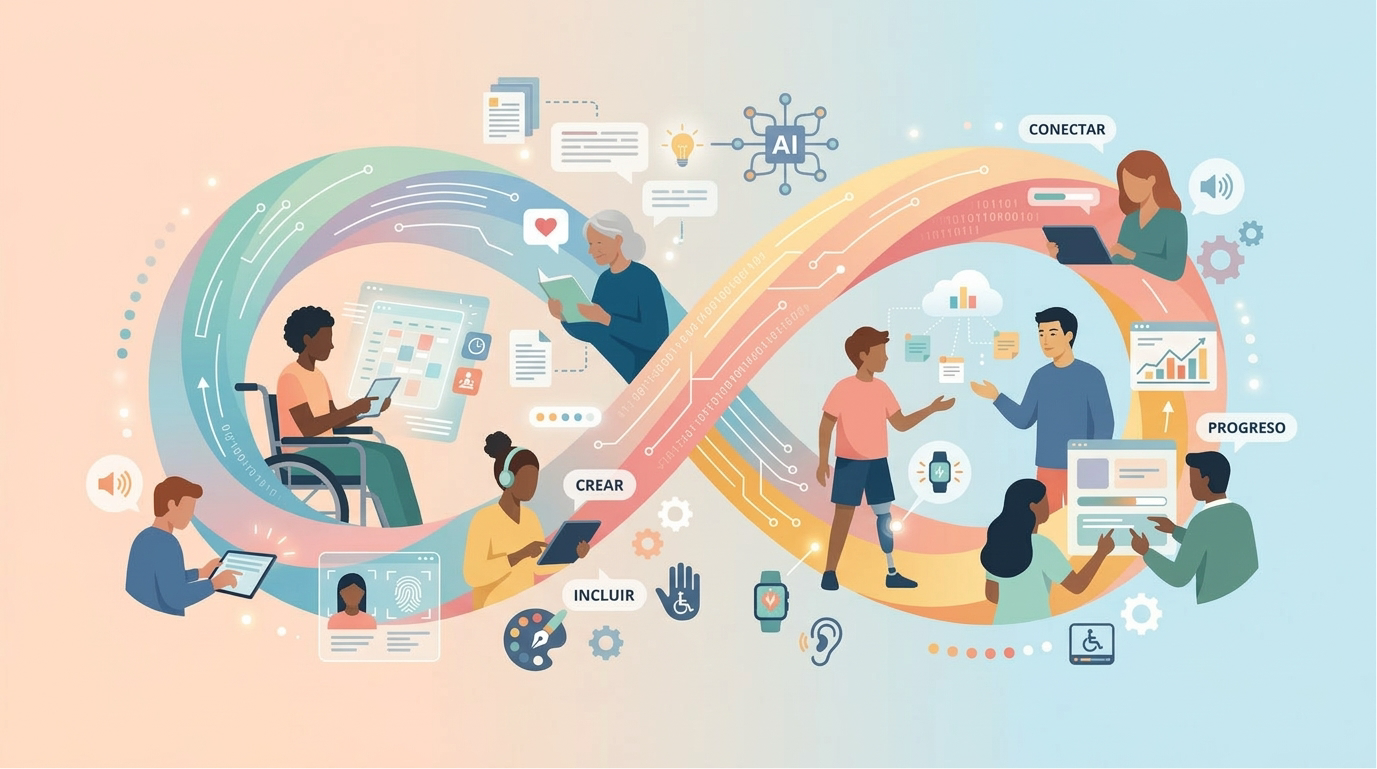
For decades, talking about autism, ADHD, dyslexia, or any other condition within the neurodiversity spectrum was loaded with stigma and misunderstanding. Today, that landscape is changing, and one of the forces contributing most to that transformation is technology. Far from being just a tool for entertainment or productivity, technology has become a bridge to inclusion, autonomy, and dignity for millions of neurodivergent people around the world.
A Prosthetic for Executive Function
For people with ADHD, for example, the challenge isn't a lack of intelligence or willpower, but difficulties with executive function: planning, prioritizing, managing time, and controlling impulses. This is where a well-configured phone or computer can work almost like a "prosthetic" that compensates for those difficulties: reminders that substitute for working memory, timers that externalize time management, and to-do lists that offload planning from the mind.
Apps that break large projects down into small steps, that show only the day's tasks to avoid feeling overwhelmed, or that block digital distractions, have become everyday allies for people living with ADHD.
What the Scientific Evidence Says
Beyond the everyday perception that "technology helps," in recent years several meta-analyses and systematic reviews — published in indexed scientific journals — have put this idea to the test with statistical rigor, and the results are encouraging.
A meta-analysis published in Pediatric Investigation (Wiley), which pooled 33 randomized clinical trials with 1,285 participants with autism spectrum disorder (ASD) across 14 countries, found significantly greater improvements in core symptoms and IQ among those who received digital health interventions compared to those who did not, with a large effect size (Zhou et al., 2024).
Along the same lines, a more recent study focused specifically on intelligent interaction technologies — such as extended reality (XR) and social robotics — analyzed 13 randomized clinical trials involving children ages 2 to 15 with ASD and found a statistically significant positive effect, especially pronounced in preschool-age children (Zhou et al., 2025).
For ADHD specifically, a systematic review and meta-analysis published in the Journal of Medical Internet Research evaluated technology-based interventions in school-age children and found small but significant effects in reducing inattention and improving parent-reported executive function (Basiouny et al., 2023). A later meta-analysis, focused on digital mental health interventions for ADHD, confirmed that these are significantly more effective than non-digital interventions at reducing overall symptoms, although the effect was likewise modest in magnitude (2024).
One interesting point these studies highlight is that technology doesn't replace human or therapeutic support — it works as a complement with real evidence of benefit, especially when combined with professional intervention.
Artificial Intelligence and Autism: Learning Tailored to the Individual
In education, the combination of artificial intelligence and machine learning allows systems to identify individual behavioral patterns and learning preferences, making it possible to design personalized pedagogical strategies for each student.
Tools such as digital visual schedules help anticipate transitions and reduce anxiety, while virtual and augmented reality are creating safe, simulated environments where children and young people with autism can practice social skills — such as holding a conversation or reading body language — without the risk of feeling overwhelmed by the real world. As mentioned earlier, this same line of work (XR and robotics) is already backed by controlled clinical trials.
From Early Diagnosis to Daily Life
Technology is also transforming how these conditions are detected. Data analysis systems make it possible to identify early indicators of autism or ADHD, opening the door to more timely and effective interventions. And once a diagnosis is made, wearable devices offer discreet support in daily life, from managing sensory overload to routine reminders.
The Underlying Challenge: Technology Isn't Enough on Its Own
It's important to say this clearly: technology is not a magic solution. There is no single app that solves every challenge a neurodivergent person faces. What really works is a combination of several tools adapted to each person's particular needs, together with the human support of families, teachers, therapists, and communities.
There's also a paradox we can't ignore: the same technology that can help can also cause harm. Social media and many apps are designed to capture attention through constant notifications and variable rewards, which is especially challenging for brains that already struggle with self-regulation. That's why talking about technology and neurodiversity also means talking about mindful, well-designed use.
Breaking Bias, Building Inclusion
Real change isn't only in the code or the algorithms, but in how we as a society decide to use these tools: to include rather than exclude, to personalize rather than homogenize, and to empower rather than label. At our foundation, we firmly believe that breaking bias toward neurodiversity starts with recognizing that every mind works differently, and that technology, properly directed, can be a powerful ally so that every person — neurotypical or neurodivergent — has the same opportunities to learn, work, and live fully.
Neurodiversity is not a problem to be solved: it is a legitimate way of being in the world. And technology, when designed and used with empathy, can help us build an environment where that diversity is not just tolerated, but celebrated.
References
Note: in addition to these peer-reviewed scientific sources, specialized reports and guides on assistive technology were consulted to provide context for specific tools and use cases.